Europe’s business aviation network and its centres of gravity
By May, the European business aviation market had moved beyond its early-season expansion phase. Activity continued to grow, but the month’s most notable signal came from where that activity concentrated.
Across a wider network of airports and aircraft, a handful of key hubs emerged as focal points for movement, reinforcing their role within Europe’s business aviation ecosystem.
From above, May 2026 revealed a network defined by its scale and by the airports and corridors that increasingly shaped how the market moved.

May became the most active month of the year so far, reflecting strong participation across the European business aviation network.
A total of 76,371 arrivals were recorded during the month, supported by 5,222 active aircraft operating through 1,407 active airports. Operations generated 31,592 unique airport pairs, highlighting both the breadth and flexibility of the market.
While the network continued to expand geographically, traffic patterns increasingly centred around a select group of airports that served as key operational gateways.

Europe’s leading business aviation airports strengthened their position during May, handling a significant share of overall activity.
ParisLe Bourget recorded the highest number of arrivals with 2,555 movements, followed by Nice with 2,133 arrivals. Geneva remained one of the continent’s busiest business aviation hubs with 1,519 arrivals, while Farnborough and Milan Linate completed the leading group.
Together, these airports formed the backbone of many of the month’s most active routes, connecting financial centres, corporate hubs and seasonal destinations across Europe.

The most active airport pairs during May reflected a network increasingly focused around several key European gateways.
The leading routes included:
The prominence of these routes illustrates how traffic concentrated around airports capable of supporting both frequent business travel and seasonal demand.
One of the clearest signals from May was the growing importance of the French Riviera within the European network. Nice strengthened its role as one of the continent’s busiest business aviation destinations, supported by seasonal travel patterns and increasing demand for access to the Mediterranean region.

Business aviation activity remained overwhelmingly European throughout May.
Approximately 94.4% of arrivals originated within Europe, confirming the region’s continued dominance across the network. North America accounted for a smaller share of activity, while Asia maintained a steady presence among intercontinental movements.
The strongest flows continued to connect France, Switzerland, Italy, Germany, the United Kingdom and Türkiye, reinforcing the importance of intra-European connectivity as the foundation of the market.

Aircraft activity remained distributed across a broad mix of mission profiles.
Turboprops recorded 21,019 arrivals, highlighting their continued importance in regional operations and access to secondary airports. Light Jets generated 12,720 arrivals, while Super Midsize Jets contributed 9,071 movements.
Activity also remained strong within the Ultra Long Range and Heavy Jet categories, reflecting sustained demand for longer-range connectivity alongside dense regional traffic patterns.
The overall fleet mix demonstrated a market balancing efficiency, flexibility and range across a diverse operational landscape.
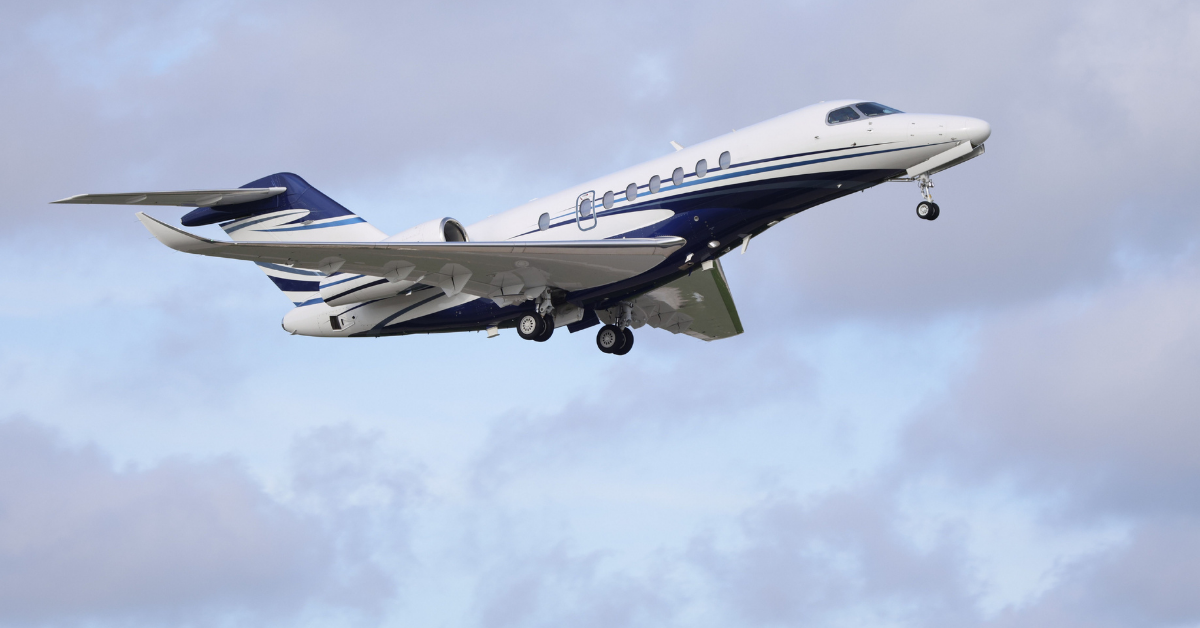
The Cessna Citation Latitude has established itself as one of the most successful aircraft in the midsize business jet segment, combining transcontinental capability with operational efficiency and broad mission flexibility.

Its range, cabin design and airport accessibility make it particularly well suited to the types of routes that defined May’s activity across Europe. Whether connecting major business centres or linking financial hubs with seasonal destinations, the Citation Latitude occupies a segment that continues to play a vital role within the market.
As traffic concentrated around key gateways such as Paris, Geneva, Farnborough and Nice, aircraft capable of delivering efficient regional connectivity remained central to network performance.
One signal stood out throughout the month: as the network expanded, traffic increasingly concentrated around a handful of strategic hubs.
The European market continued to offer extensive point-to-point connectivity, while a small group of airports emerged as clear centres of gravity for business aviation activity.

May 2026 highlighted the strength of Europe’s interconnected business aviation network. Activity expanded across more airports, more aircraft and more route combinations, while key operational gateways continued to attract a growing share of movements.
The result was a market that combined broad reach with clear focal points, demonstrating both the flexibility and structure that define business aviation across Europe.

The market recorded 81,675 arrivals across 1,360 active airports, involving 5,614 aircraft and 33,536 unique airport pairs.
JETRON has once again closed a transaction involving a large-cabin business jet.
August marked a step down from July’s peak activity





_white.png)